When a new casino resort is proposed, the conversation is almost always framed around economics and entertainment. We hear about job creation, tourism revenue, and the dazzling allure of world-class facilities. It’s a narrative of prosperity and progress, presented as a winning hand for the local community. But beneath this glittering surface lies a significant environmental gamble, one where the stakes are Florida’s unique and fragile ecosystems. The true cost of a casino isn’t measured in dollars, but in acres of cleared land, gallons of fresh water, and the disruption of delicate natural balances. For our forests, the construction of a massive entertainment complex is far more than a simple roll of the dice; it’s a high-risk bet where the house—our shared natural heritage—stands to lose the most.
The Footprint on the Forest Floor
The most immediate and irreversible impact of a casino development is the physical footprint it leaves on the land. In a state like Florida, where wild spaces are constantly under pressure from development, the construction of a large-scale resort is a significant blow to the local ecosystem. This goes far beyond the building itself. The project includes vast parking lots, manicured golf courses, sprawling access roads, and other infrastructure that requires the clearing of hundreds, if not thousands, of acres of native habitat. This process of deforestation and land conversion triggers a cascade of negative ecological consequences.
The impact is not just about the loss of trees; it’s about the complete dismantling of a complex, interconnected community of life.
- Habitat Fragmentation: New roads and sprawling buildings slice through contiguous forests, creating isolated “islands” of habitat. This fragmentation can be devastating for wildlife with large territories, such as the Florida panther or the black bear, making it difficult for them to hunt, breed, and migrate.
- Loss of Biodiversity: The cleared land was once home to countless species of plants, insects, birds, and animals. While some may relocate, many specialist species that depend on that specific habitat are lost from the area entirely.
- Soil Erosion and Runoff: Native vegetation is excellent at holding soil in place and absorbing rainwater. Once it’s removed and replaced with impervious surfaces like asphalt and concrete, soil erosion increases, and stormwater runoff carries pollutants like oil and heavy metals directly into nearby wetlands and streams.
- Light and Noise Pollution: A 24/7 operation generates significant light and noise, disrupting the natural behaviors of nocturnal animals, interfering with bird migration patterns, and creating a permanent zone of disturbance that extends far beyond the property line.
The Thirst of the Entertainment Machine
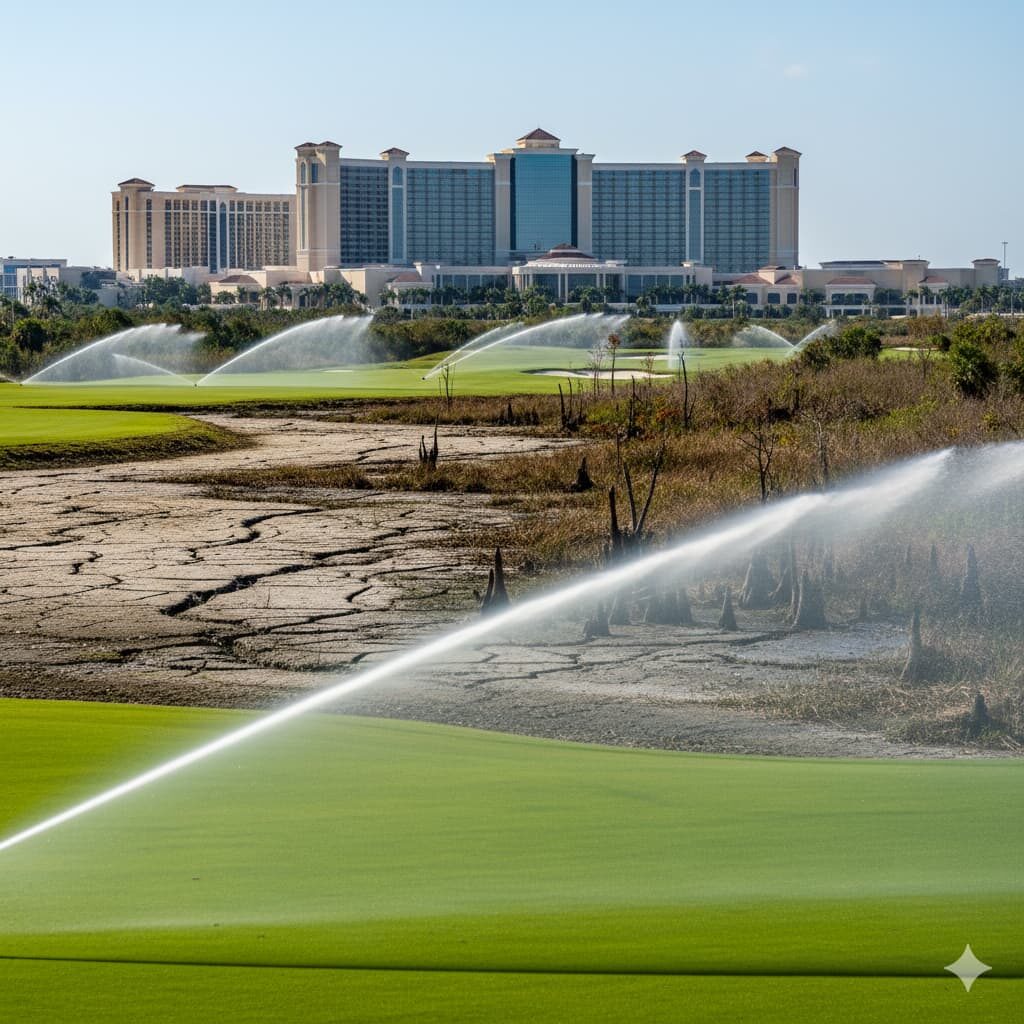
While the physical footprint is the most visible impact, the casino’s thirst for water is one of its most significant hidden costs. These facilities are incredibly water-intensive. Maintaining lush, green golf courses under the Florida sun, filling decorative fountains and swimming pools, and serving the needs of thousands of guests daily places an enormous strain on the local water supply, which in Florida almost always means the Floridan Aquifer. This vast underground reservoir is the lifeblood of our state’s springs, rivers, and forests. Over-extraction to serve a single large facility can lower the water table, reducing the flow to natural springs and depriving deep-rooted trees of the moisture they need to survive droughts. The sheer scale of this resource consumption is often masked by the dazzling array of entertainment designed to hold our attention. The modern consumer is drawn to digital distractions, a far cry from the environmental realities outside. For instance, the simple, nostalgic appeal of classic games has found a new home online, with many seeking out the best free fruit slots for Polish players as a form of harmless escapism, unaware of the resource-intensive industries that physical entertainment venues represent. Furthermore, the wastewater generated by the resort poses another threat. Even with modern treatment facilities, the risk of nutrient-rich effluent reaching and contaminating sensitive aquatic ecosystems remains a serious concern.
Beyond the Blueprint: Indirect and Long-Term Impacts
The environmental costs don’t end at the property line. The development of a major casino acts as a powerful economic magnet, triggering a wave of secondary growth that ripples outward into the surrounding landscape. This includes new hotels, housing developments, restaurants, and retail centers, all of which contribute to urban sprawl. This ancillary development further consumes natural land, increases traffic congestion and associated air pollution, and places even greater demands on water and energy resources. The energy consumption of the main resort alone is staggering. A facility designed to operate around the clock with bright lights, air conditioning, and countless electronic machines has an energy footprint comparable to a small town. This contributes to greenhouse gas emissions and furthers the cycle of climate change, which in turn brings more extreme weather events like hurricanes and droughts, putting our forests at even greater risk.
Making informed choices is crucial, not just for the environment but for consumers in every industry. Just as conscientious travelers research the ecological footprint of their destinations, responsible consumers in the gaming world seek out transparency and reliability. They look for platforms that provide honest reviews of Polish casinos to ensure they are engaging with reputable operators. This principle of due diligence—whether applied to entertainment choices or environmental advocacy—is fundamental to fostering a more sustainable and accountable world. The long-term vision must extend beyond short-term economic gains to consider the permanent ecological debt being created.
Ultimately, the decision to approve and build a casino is a choice about our priorities. While the economic benefits can be tempting, they must be honestly weighed against the permanent environmental damage. The vibrant lights of a casino floor may create an illusion of endless winning, but if that success comes at the expense of our forests, wetlands, and wildlife, it represents a profound and irreversible loss for everyone.